Cities Going Green

Chandan Singh
| 15-05-2026
 · Science Team
Walk through any major city and you'll notice something shifting in how new buildings look and work.
Rooftops covered in solar panels, facades with embedded greenery, smart sensors tracking everything from temperature to air quality.
It's not just aesthetic. It's a response to a hard number: buildings are responsible for 37% of global energy-related CO2 emissions. That makes construction one of the biggest levers available for reducing emissions, and in 2025, the industry is finally starting to pull it seriously.
The green building market hit $618.58 billion this year and is projected to more than double to $1.37 trillion by 2034. Europe leads with 39% of global market share, while Asia-Pacific is growing fastest. The push isn't purely idealistic either. It's driven by tightening regulations, measurable financial returns, and the reality that buildings designed 20 years ago are simply not built for the energy landscape we're now operating in.
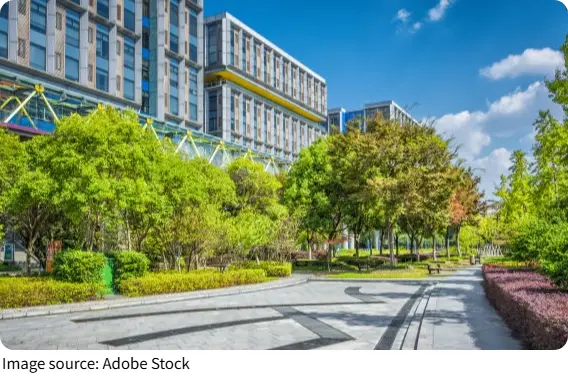
Net-Zero Buildings Are Becoming the Baseline
The concept of net-zero energy buildings, structures that generate as much energy as they consume annually, has moved from architectural novelty to an actual regulatory target. LEED-certified buildings, one of the most widely recognized green building standards, already show a measurable rent premium.
Certified buildings command around $2.91 per square foot in rental rates compared to $2.16 for conventional ones, and residential properties with green credentials carry roughly 8% higher resale values. The upfront cost premium of 2 to 7% for greener construction pays back meaningfully over a building's lifetime.
Materials Are Getting Smarter Too
Construction consumes about 3 billion tons of raw materials globally every year, so what buildings are made of matters as much as how they're powered. A few emerging materials are worth knowing about. Self-healing concrete contains agents that automatically repair hairline cracks when exposed to air and moisture, extending structural lifespan significantly.
Hempcrete is carbon-negative, pulling more carbon out of the atmosphere during its growth phase than is emitted in its production. Mycelium-based insulation, grown from mushroom root structures, is lightweight, biodegradable, and performs well thermally. These aren't fringe experiments anymore. They're being incorporated into real projects as cost curves come down.
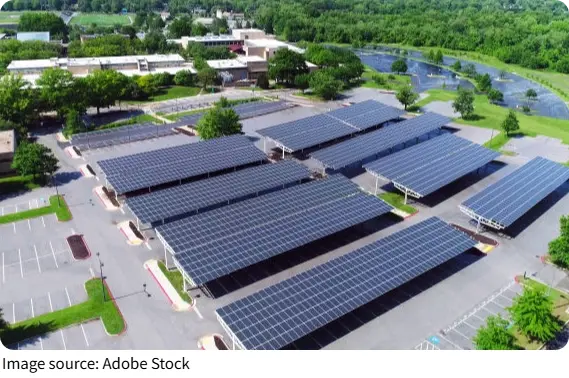
Smart Tech Is Running the Day-to-Day
IoT integration in buildings has shifted from optional feature to standard expectation. Occupancy-based automation adjusts lighting, heating, and cooling based on real-time sensor data rather than fixed schedules. AI-powered building management systems run predictive maintenance, catching equipment issues before they become failures.
Real-time energy dashboards let building managers see where waste is happening and respond to it immediately.
Buildings using these smart systems are reporting roughly 25% lower energy consumption and 20% reduced maintenance costs compared to conventional structures.
That's not a marginal improvement. For large commercial properties, those figures translate into substantial operating savings year over year. The direction is clear. Sustainable construction is no longer a niche specialty. It's becoming the default, and cities that move early on building codes and incentive structures will be better positioned for the decades ahead.