Sirih Leaf Garden

Samir
| 28-11-2026
 · Plant Team
Hi, Lykkers! Sirih junjung is a traditional Malaysian decorative arrangement featuring carefully organised betel leaves, known locally as daun sirih.
Recognised for its distinctive upright structure and fresh green appearance, this arrangement combines natural materials with thoughtful presentation.
It demonstrates how familiar tropical foliage can become an attractive decorative feature through careful selection, layering, and creative design.
The term "junjung" suggests something arranged or held upright, reflecting the characteristic vertical form of this display. Although traditionally associated with special occasions, the concept can also inspire modern botanical arrangements, interior decoration, and creative floral styling.
Understanding the Sirih Plant
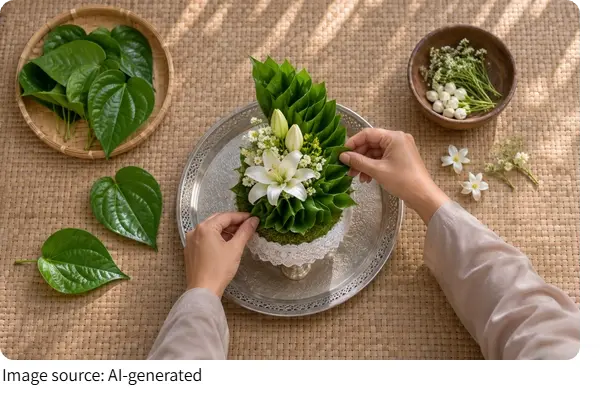
Betel leaf comes from Piper betle, a tropical climbing plant that grows well in warm, humid environments. Its leaves are generally heart-shaped, with pointed tips, smooth surfaces, and visible veins. Their rich green colour and natural sheen make them suitable for decorative arrangements.
The plant grows as a vine and often requires support to climb. In suitable conditions, it can be cultivated in gardens, shaded outdoor areas, or containers with structures that encourage vertical growth. Its preference for warmth and indirect light also makes it an interesting plant for tropical gardening.
For decorative purposes, leaves should be selected carefully. Healthy specimens with consistent colour, intact edges, and minimal blemishes provide a neat foundation for an arrangement.
The Art of Building a Sirih Junjung Arrangement
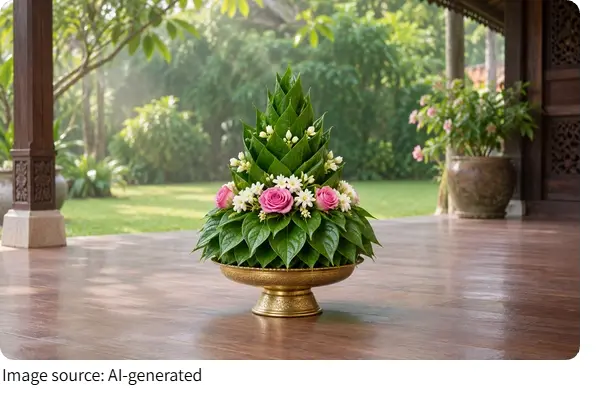
A traditional sirih junjung arrangement is usually designed with a clear vertical structure. The leaves are positioned in organised layers, creating a balanced silhouette that becomes narrower or more defined towards the upper section, depending on the chosen style.
Preparation begins by selecting leaves of similar size and appearance. Each leaf should be cleaned gently with a damp cloth and dried before assembly. This helps remove dust while preserving the natural surface.
The leaves can then be arranged around a suitable supporting structure. Floral wire, soft ties, and discreet holders may help keep the arrangement stable without damaging the foliage. The central support should be strong enough to maintain the shape, especially when the display is tall.
Some contemporary interpretations combine sirih leaves with small flowers, decorative ribbons, or other tropical foliage. However, keeping the design relatively simple allows the natural leaf patterns to remain the main attraction.
Decorative Uses in Modern Spaces
The visual appeal of sirih junjung makes it suitable for more than traditional displays. A smaller arrangement can become an attractive centrepiece for a dining table, reception counter, or covered outdoor area. Taller versions may work well as decorative features at entrances or event spaces.
For a contemporary setting, a simple ceramic or woven base can complement the green leaves. Natural materials such as bamboo, rattan, and wood create a warm tropical atmosphere. In more formal interiors, a neutral container can provide contrast and keep attention on the foliage.
The arrangement can also be adapted for garden-themed celebrations, photography backgrounds, and botanical exhibitions. Its vertical shape makes it particularly useful when a decorative display needs to create height without occupying a large horizontal area.
Tips for Keeping the Leaves Fresh
Fresh sirih leaves require careful handling because they can lose moisture after being separated from the plant. Prepare the arrangement as close as possible to the display time. Keep it away from direct sunlight, strong air-conditioning, and hot surfaces.
If the design uses water-retaining floral materials, ensure they remain appropriately moist without allowing the supporting structure to become unstable. Remove wilted or damaged leaves when necessary, and avoid excessive handling that may cause bruising.
For a longer-lasting decorative alternative, preserved or artificial leaves can be used. These options are particularly practical for permanent indoor displays, although they do not provide the same natural freshness as living foliage.
A Celebration of Tropical Botanical Design
The Malaysian Sirih Junjung Garden highlights the decorative potential of a familiar tropical plant. Through careful arrangement, natural textures, and balanced proportions, betel leaves become an expressive design element.
Whether presented in a traditional setting or reinterpreted for modern interiors, sirih junjung offers an elegant way to bring tropical greenery and Malaysian decorative artistry into everyday spaces.